
Your Cart is Empty


Reviewed by the NSD Spinner team · Updated July 2026 · This article is educational and not medical advice — for severe or lasting pain, see a physician or physical therapist.
Pickleball elbow is a repetitive-strain injury to the tendons on the outside of the elbow, caused by the wrist and forearm overloading during play. It's the same condition as tennis elbow (lateral epicondylitis) — and among pickleball players it's now one of the most common complaints on the court. The fast fix everyone reaches for is a softer paddle, but that only lowers the strain. The lasting fix is building a forearm strong enough to handle the load.

Pickleball elbow is lateral epicondylitis — small tears and inflammation in the tendons that attach your forearm muscles to the outside of the elbow. You feel it as a burning or aching pain on the outer elbow that can radiate down the forearm toward the wrist.
The main pickleball elbow symptoms are pain and tenderness on the outer elbow, a weaker grip, and pickleball arm pain that can travel down the forearm. The tell-tale sign players report: the pain flares when you grip. Many describe not being able to lift a coffee cup the morning after a long session. If gripping the paddle, shaking hands, or picking up a jug hurts, that's the classic pattern.
It comes down to one imbalance: the load on the tendon is bigger than the forearm's capacity to absorb it, repeated thousands of times. Several habits push the load too high:
Backhand shots are the most common trigger, because the wrist has to stabilize against the paddle's impact.
A softer, lower-vibration paddle helps — but only by lowering the load. It doesn't raise your capacity, so the pain tends to return once you play more or switch paddles again. This is the trap: players keep buying "arm-friendly" paddles and stay stuck in the same cycle.
Think of it as a simple equation — pain happens when load beats capacity. You can attack it from both sides:
| Approach | What it does | Limitation |
|---|---|---|
| Lower the load (softer paddle, bigger grip, less wrist) | Reduces strain per shot | Pain returns as play volume rises |
| Raise the capacity (forearm strengthening) | Builds a tendon that can take the hits | Takes consistent daily work |
The players who beat pickleball elbow for good usually do both — but the second half, building capacity, is the part most people skip.
Recovery combines short-term relief with long-term strengthening. In the early painful phase, reduce load and calm the tendon; as pain settles, progressively rebuild forearm strength so it doesn't come back. The best exercises for pickleball elbow train both the wrist flexors and extensors through their full range — not just stretch one side.

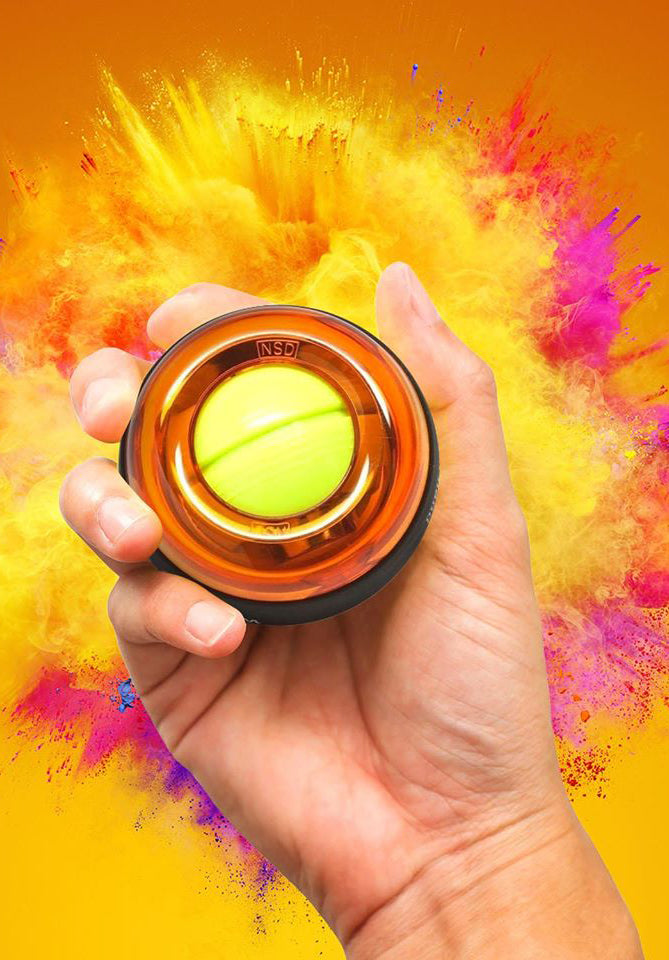
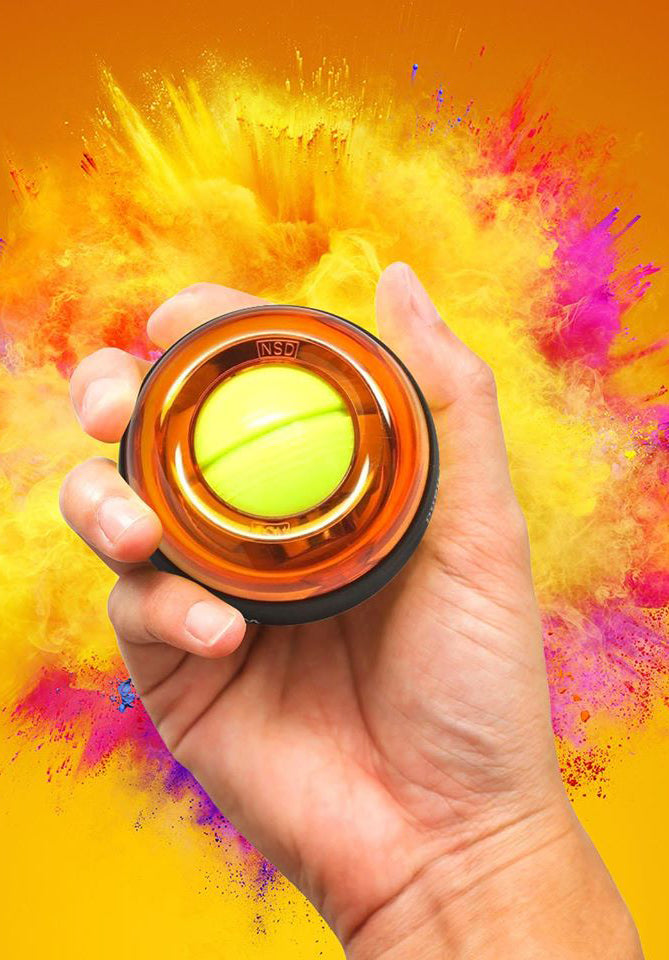
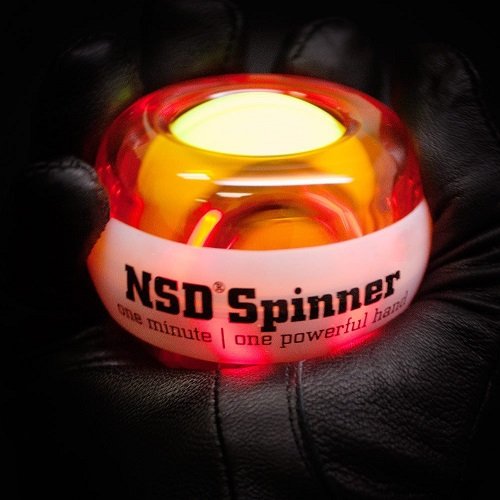
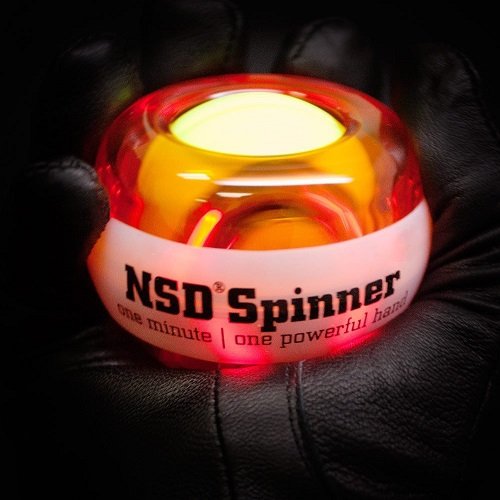
A gyroscopic forearm exerciser is a compact way to train the whole forearm with zero impact on the joint — useful because it works the wrist through its natural range while adding resistance, and it trains both directions. A simple daily starting point:
Unlike a static stretch bar that mostly loads one direction, a gyroscopic trainer keeps the forearm working through a continuous range — and an easy-start (thumb-wind) model removes the fiddly ripcord, so there's no barrier to doing it daily. Explore the NSD Spinner range if you want a portable option to build capacity between games.
A pickleball elbow brace (a forearm strap or counterforce band) can help in the short term by offloading the sore tendon during play and daily tasks, which reduces pain. But a brace only manages symptoms — it doesn't build any strength, so on its own it won't stop the problem returning.
Use a brace as a bridge, not a cure: wear it to stay comfortable while you fix your technique and, most importantly, rebuild forearm capacity. The brace buys you comfort today; the strengthening keeps the pain gone tomorrow.
Tendon injuries are slow. Mild cases often settle in a few weeks with load management, but moderate-to-severe pickleball elbow commonly takes 6–12 weeks of consistent rehab — and sometimes longer if you keep playing through it without addressing the cause. Strengthening shortens the odds of it returning; rest alone often doesn't, because it lowers the pain without raising capacity.
There's evidence behind the strengthening approach: a peer-reviewed study of an 8-week gyroscopic-device resistance program reported improvements in tennis-elbow pain, grip strength, range of motion and function. It's not a cure-all, but it supports what players see in practice — building the forearm helps.
Is pickleball elbow the same as tennis elbow?
Yes. Both are lateral epicondylitis — the same tendon injury on the outside of the elbow, just named for the sport that triggered it.
Should I stop playing pickleball with elbow pain?
You don't always have to stop completely, but you should reduce volume and fix the cause. Playing hard through sharp, worsening pain risks turning a short recovery into a months-long one.
Do forearm exercises really help pickleball elbow?
Yes — progressive forearm strengthening is one of the most supported approaches for lateral epicondylitis, because it raises the tendon's capacity to handle load. Start light and build up.
Gyro ball or stretch bar for pickleball elbow?
Both strengthen the forearm. A stretch bar mainly loads one motion; a gyroscopic trainer works the wrist through a continuous range in both directions and is easy to keep portable for daily use. Many players use whichever they'll actually do every day.
How do I know it's pickleball elbow and not something else?
The hallmark is outer-elbow pain that flares when you grip. If pain is severe, comes with numbness, or doesn't improve, see a physician or physical therapist for a proper diagnosis.
Pickleball elbow won't disappear just because you switched paddles. A softer paddle lowers the load; a stronger forearm raises your capacity — and that's what keeps the pain from coming back. Calm it down, fix the trigger, then build capacity with a few minutes of daily forearm work so you can keep playing the game you love.
Want to stop it coming back? Read our prevention guide: How to Prevent Pickleball Elbow (and Keep Playing All Season).